

Research library
Browse the association's papers, technical reports and studies.
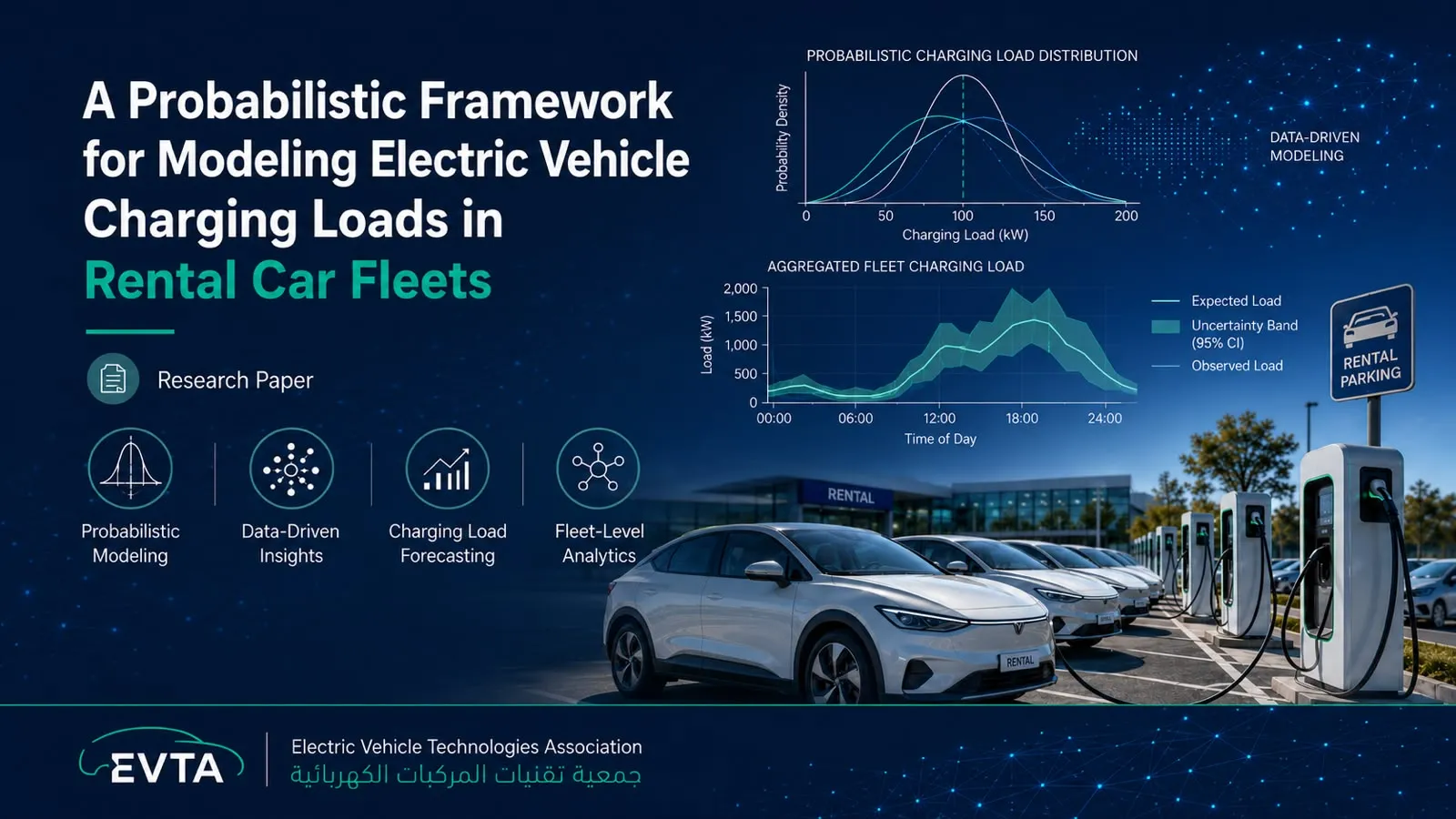
A Probabilistic Framework for Modeling Electric Vehicle Charging Loads in Rental Car Fleets
Ahmed Alanazi, Abdulaziz Almutairi
Electrical Engineering Department, College of Engineering, Majmaah University
This study presents a data-driven probabilistic framework for estimating electric vehicle charging demand in rental car fleets. It integrates rental mobility data, EV technical specifications, and charging standards, while using Monte Carlo simulation to capture uncertainties in user behavior and charging processes. A priority-based charging management framework is also developed to improve charger utilization, reduce unmet charging demand, and support cost-effective charging infrastructure planning.
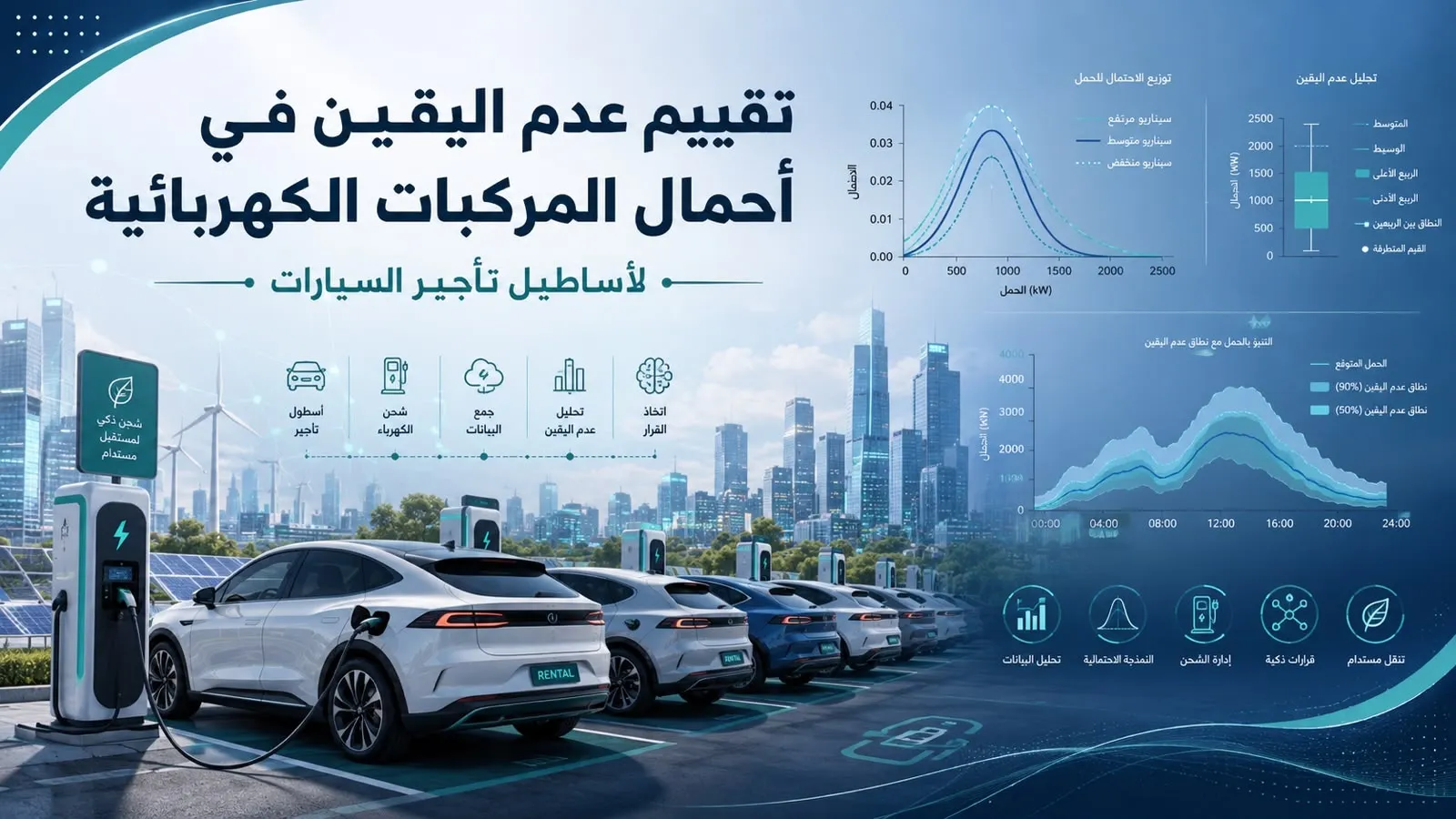
Assessing EV Load Uncertainty in Rental Car Fleets: Statistical Insights for Effective Charging Infrastructure
Ahmed Alanazi, Abdulaziz Almutairi
Electrical Engineering Department, College of Engineering, Majmaah University
This study assesses the uncertainty associated with electric vehicle charging loads in rental car fleets and develops a data-driven framework for estimating energy consumption and charging requirements. Using real-world rental contract data, the study analyzes vehicle usage patterns, pick-up and drop-off times, rental durations, and charging energy demand. Multiple probability distributions were evaluated using the Kolmogorov–Smirnov goodness-of-fit test to identify suitable statistical models, providing practical insights for charging infrastructure planning, load management, and vehicle availability.
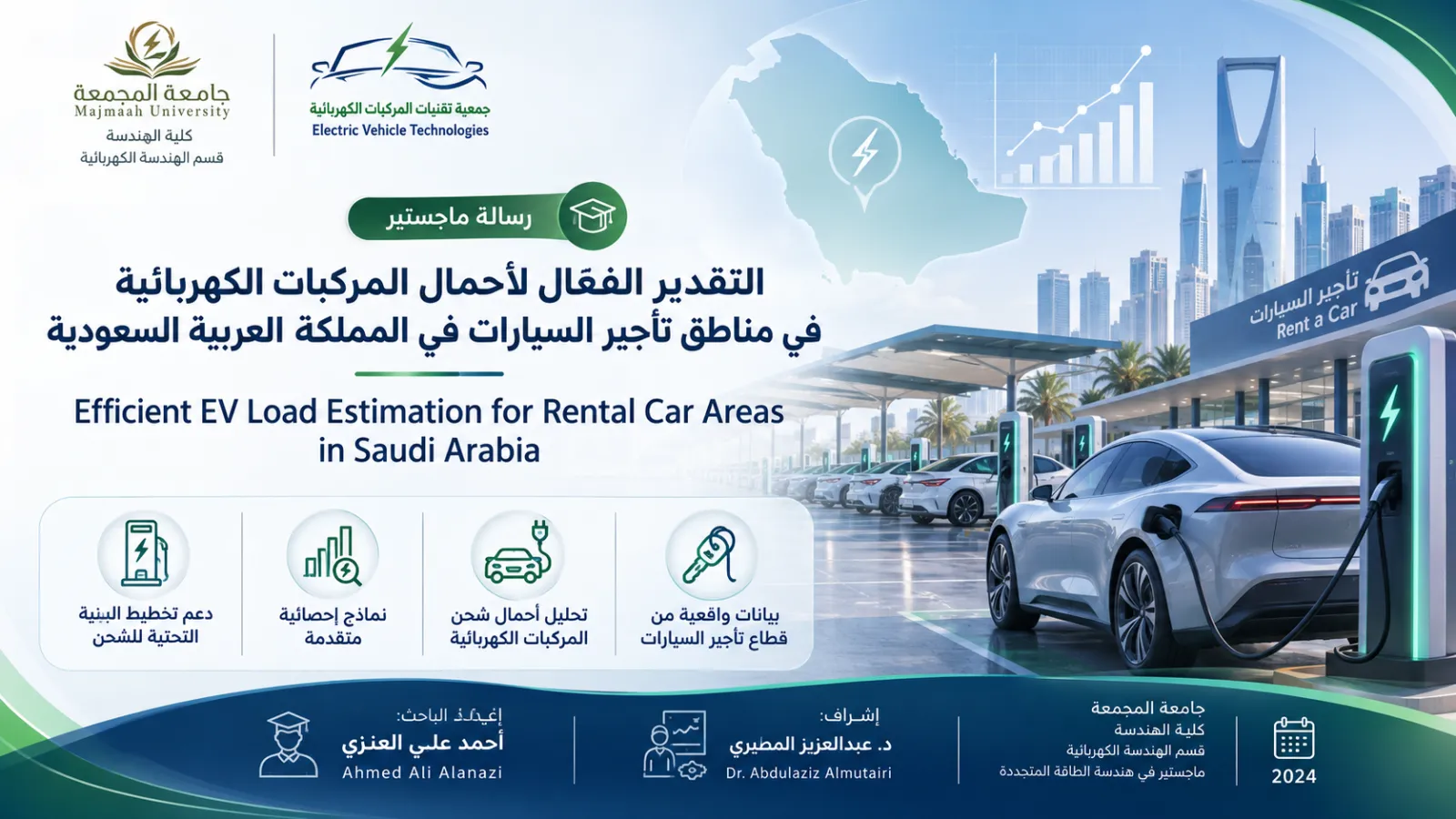
Efficient EV Load Estimation for Rental Car Areas in Saudi Arabia
Eng. Ahmed Ali Al-Enezi
Majmaah University
This thesis presents a probabilistic framework for estimating and analyzing electric vehicle charging loads in rental car areas while accounting for uncertainties associated with user behavior and charging characteristics. The study utilizes real-world vehicle mobility data, including travel distances, pick-up and drop-off times, and rental durations, together with battery specifications, EV ranges, and charging standards. Statistical models and Monte Carlo simulation are employed to estimate EV charging load profiles and evaluate different charging infrastructure scenarios, supporting effective planning and management of charging infrastructure in the rental car industry.
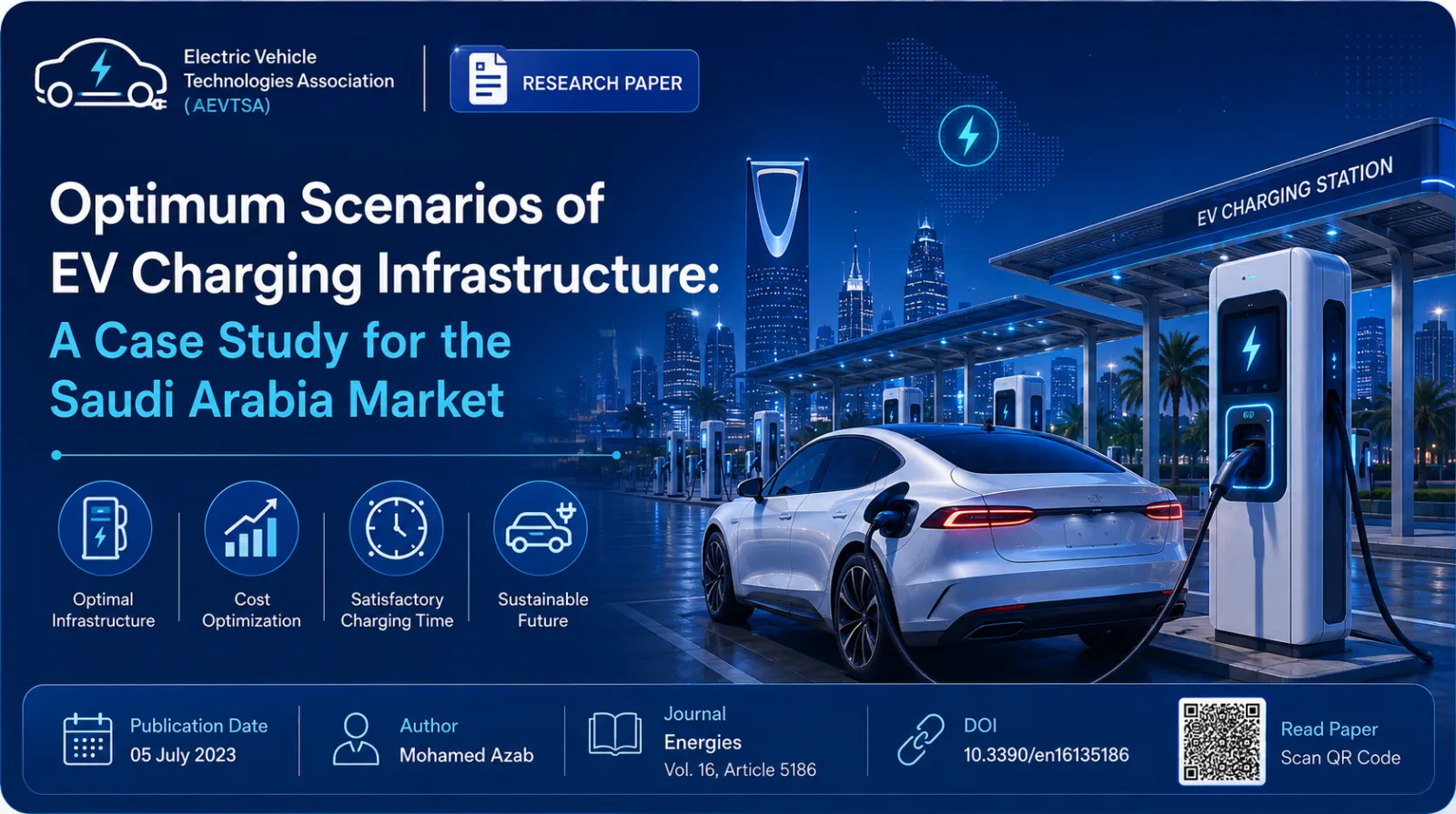
Optimum Scenarios of EV Charging Infrastructure: A Case Study for the Saudi Arabia Market
Mohamed Azab
Yanbu Industrial College, Saudi Arabia; Faculty of Engineering, Benha University, Egypt.
A scientific study investigating optimal EV charging infrastructure scenarios for the Saudi Arabian market by balancing charging infrastructure costs, charging time, and service quality, while determining suitable charger-to-EV ratios.
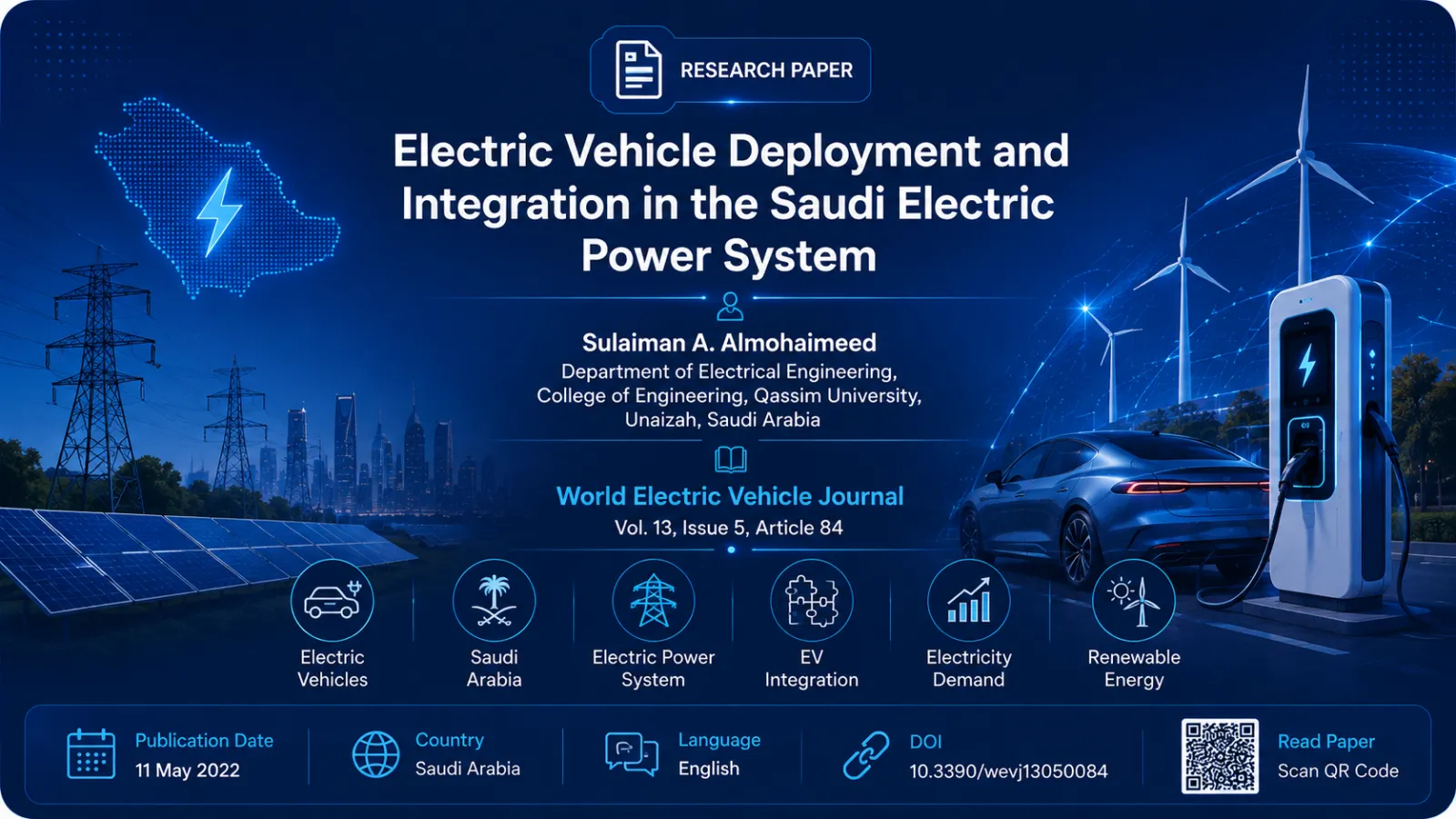
Electric Vehicle Deployment and Integration in the Saudi Electric Power System
Sulaiman A. Almohaimeed
Department of Electrical Engineering, College of Engineering, Qassim University, Unaizah, Saudi Arabia
A research study examining electric vehicle deployment and integration within the Saudi electric power system, including the implications of EV adoption for electricity demand, grid operation, renewable energy integration, and the future development of electric mobility in Saudi Arabia.
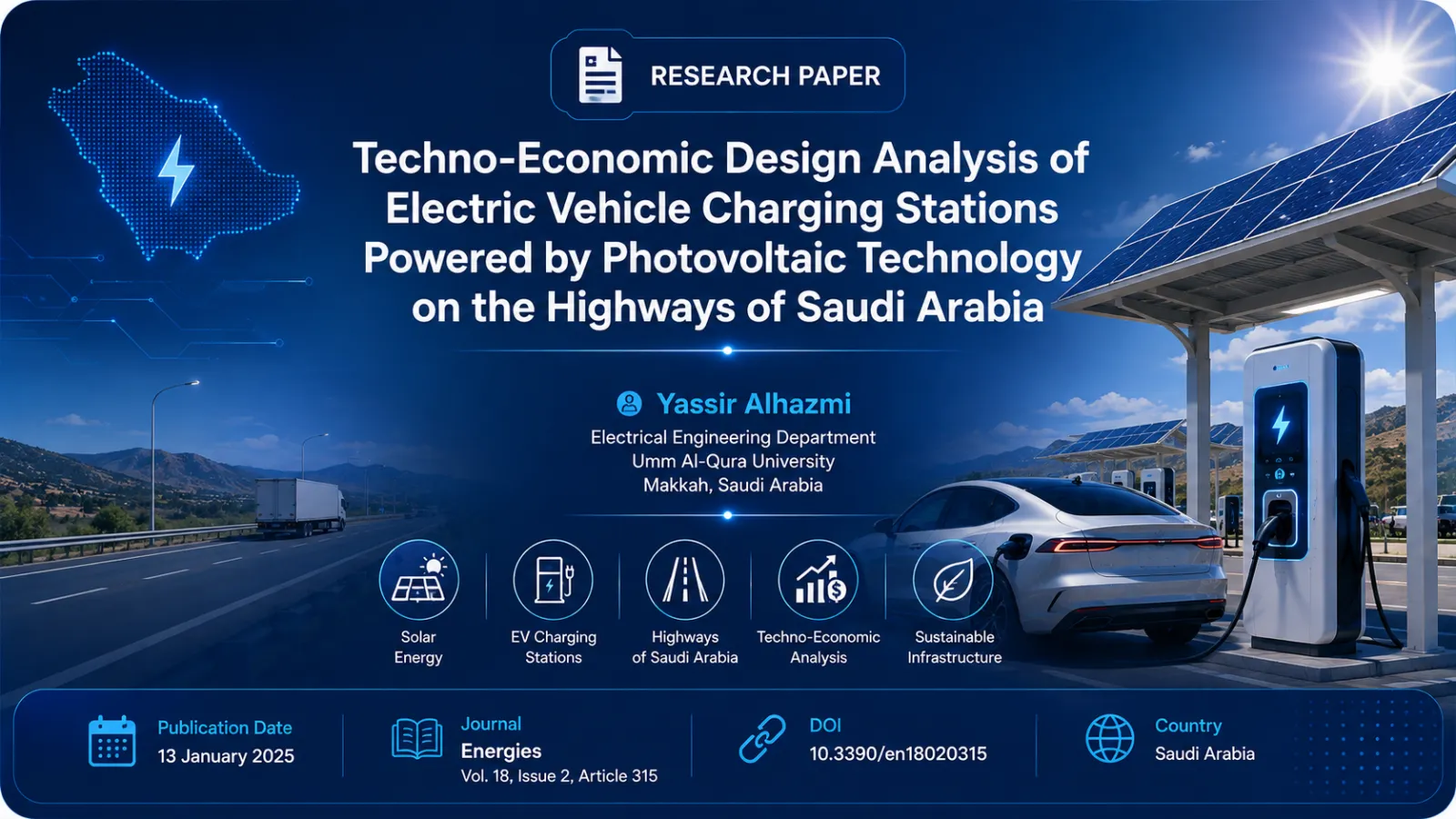
Techno-Economic Design Analysis of Electric Vehicle Charging Stations Powered by Photovoltaic Technology on the Highways of Saudi Arabia
Yassir Alhazmi
Electrical Engineering Department, Umm Al-Qura University, Makkah, Saudi Arabia
A scientific study investigating the techno-economic design of photovoltaic-powered electric vehicle charging stations along Saudi Arabian highways, with a focus on developing sustainable and efficient charging infrastructure.
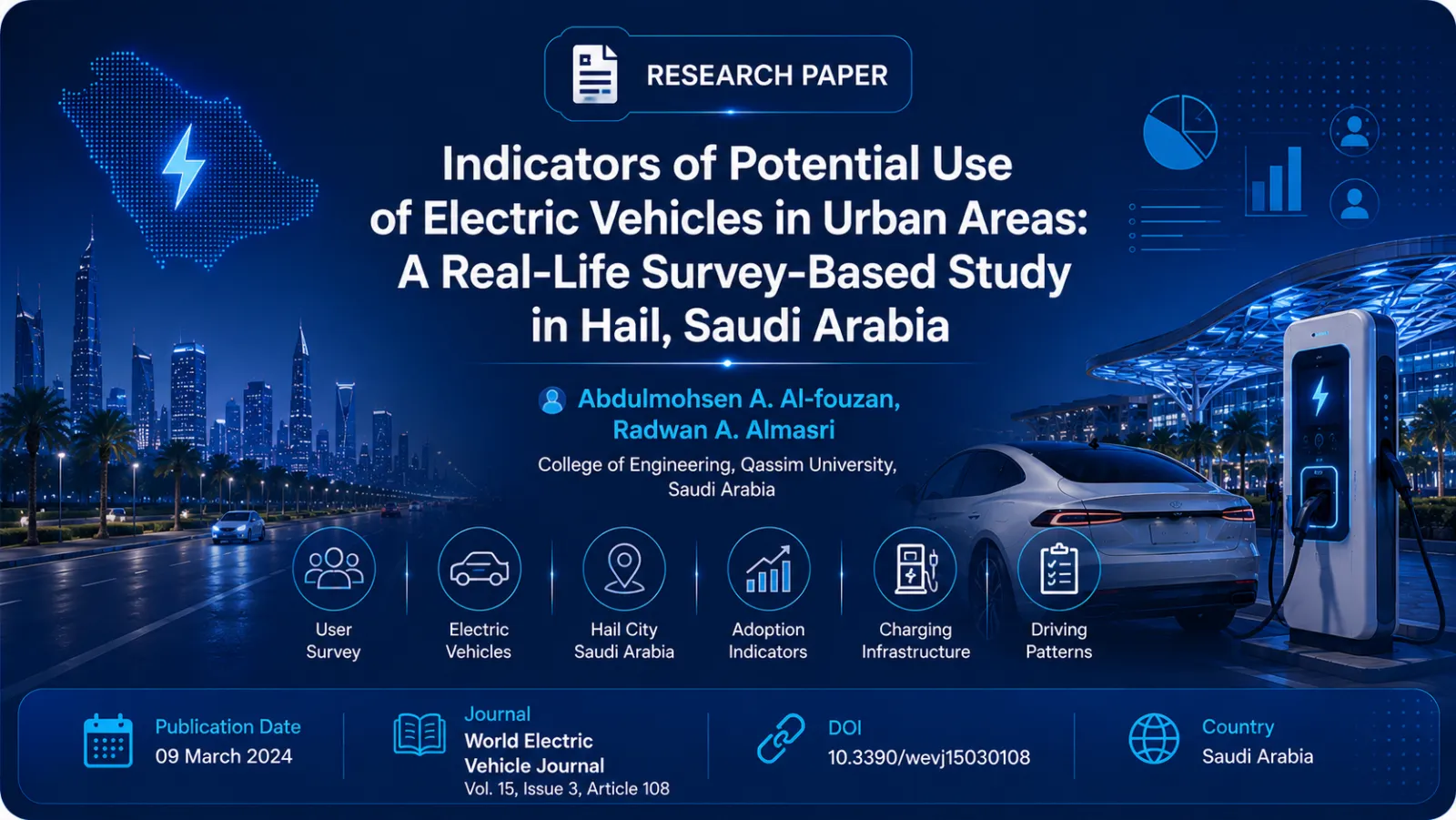
Indicators of Potential Use of Electric Vehicles in Urban Areas: A Real-Life Survey-Based Study in Hail, Saudi Arabia
Abdulmohsen A. Al-fouzan, Radwan A. Almasri
College of Engineering, Qassim University, Saudi Arabia
A real-life survey-based study examining the attitudes, preferences, and driving patterns of residents in Hail, Saudi Arabia, toward electric vehicles, while highlighting the infrastructure requirements associated with future EV adoption.
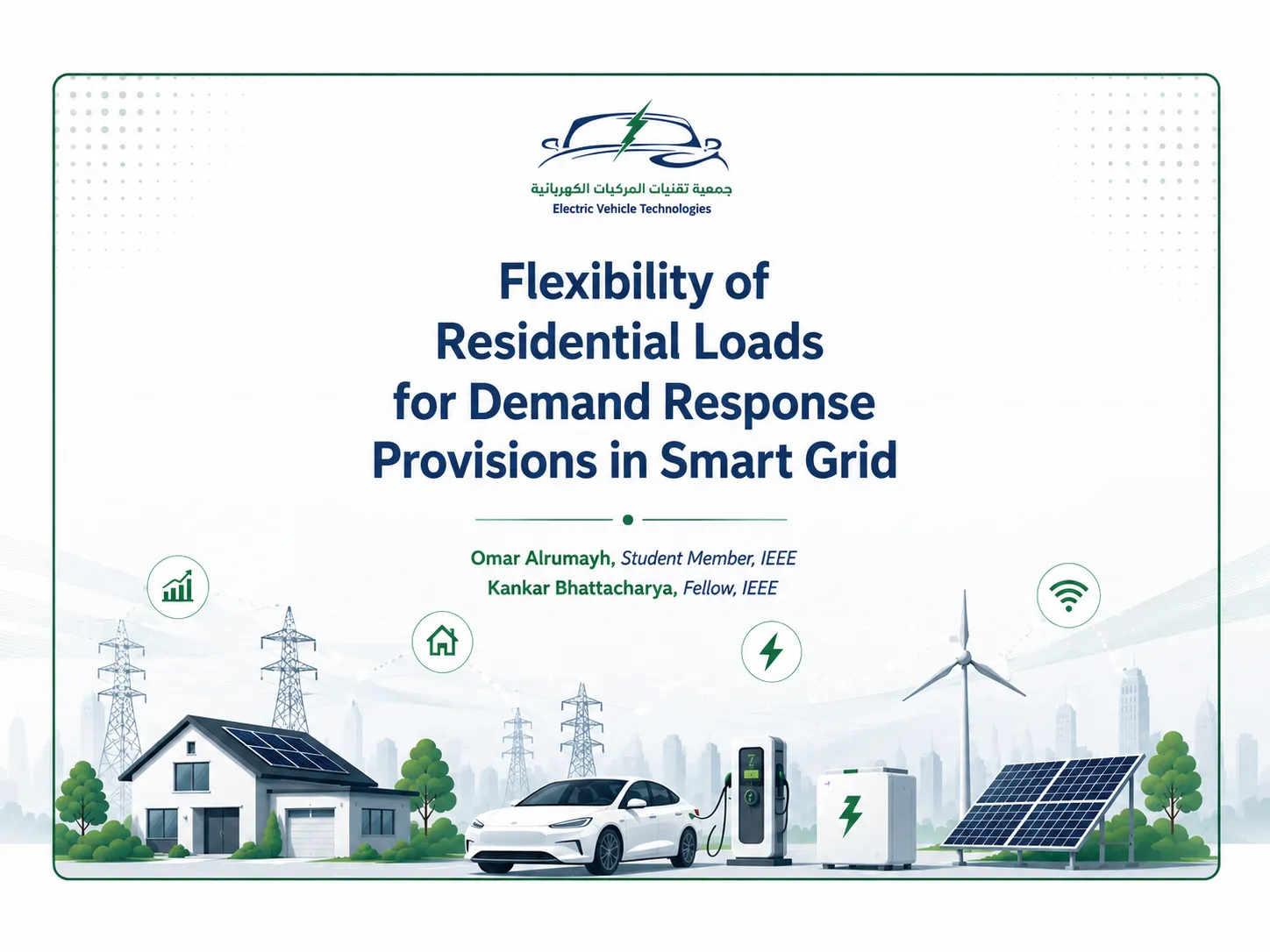
Flexibility of Residential Loads for Demand Response Provisions in Smart Grid
Dr. Omar Alrumayh, Kankar Bhattacharya
Qassim University, University of Waterloo
This study presents a two-stage optimization framework for coordinating residential load flexibility in smart grids. Home Energy Management Systems optimize household energy consumption and determine available flexibility, which is then aggregated by the Local Distribution Company to improve grid operational performance and reduce peak demand. The proposed framework is demonstrated using a 33-bus distribution system coordinating 1,295 households with varying customer preferences and objectives.

Inclusion of Battery SoH Estimation in Smart Distribution Planning with Energy Storage Systems
Dr. Omar Alrumayh, Steven Wong, Kankar Bhattacharya
Qassim University, University of Waterloo
This study proposes an integrated framework for planning energy storage systems in smart distribution grids, incorporating a neural network-based State of Health (SoH) estimator for lithium-ion batteries. The proposed approach accounts for battery degradation when determining the optimal capacity, location, installation year, and replacement of energy storage systems, improving long-term distribution planning and operational decisions.

Optimizing EV Charging Infrastructure in Multi-Unit Residential Buildings for Sustainable Energy Management
Dr. Abdulaziz Almutairi
Majmaah University
This study proposes an optimization approach to determine the optimal number of electric vehicle chargers in multi-unit residential buildings (MURBs), considering continuous and flexible charging options. Driver travel behavior is estimated using National Household Travel Survey (NHTS) data, followed by estimation of daily EV energy consumption. A mathematical optimization framework is then developed to determine the required number of chargers while maintaining satisfactory service. The results demonstrate that flexible charging can significantly reduce the number of required chargers while maintaining comparable service quality, contributing to more efficient infrastructure utilization and sustainable energy management.
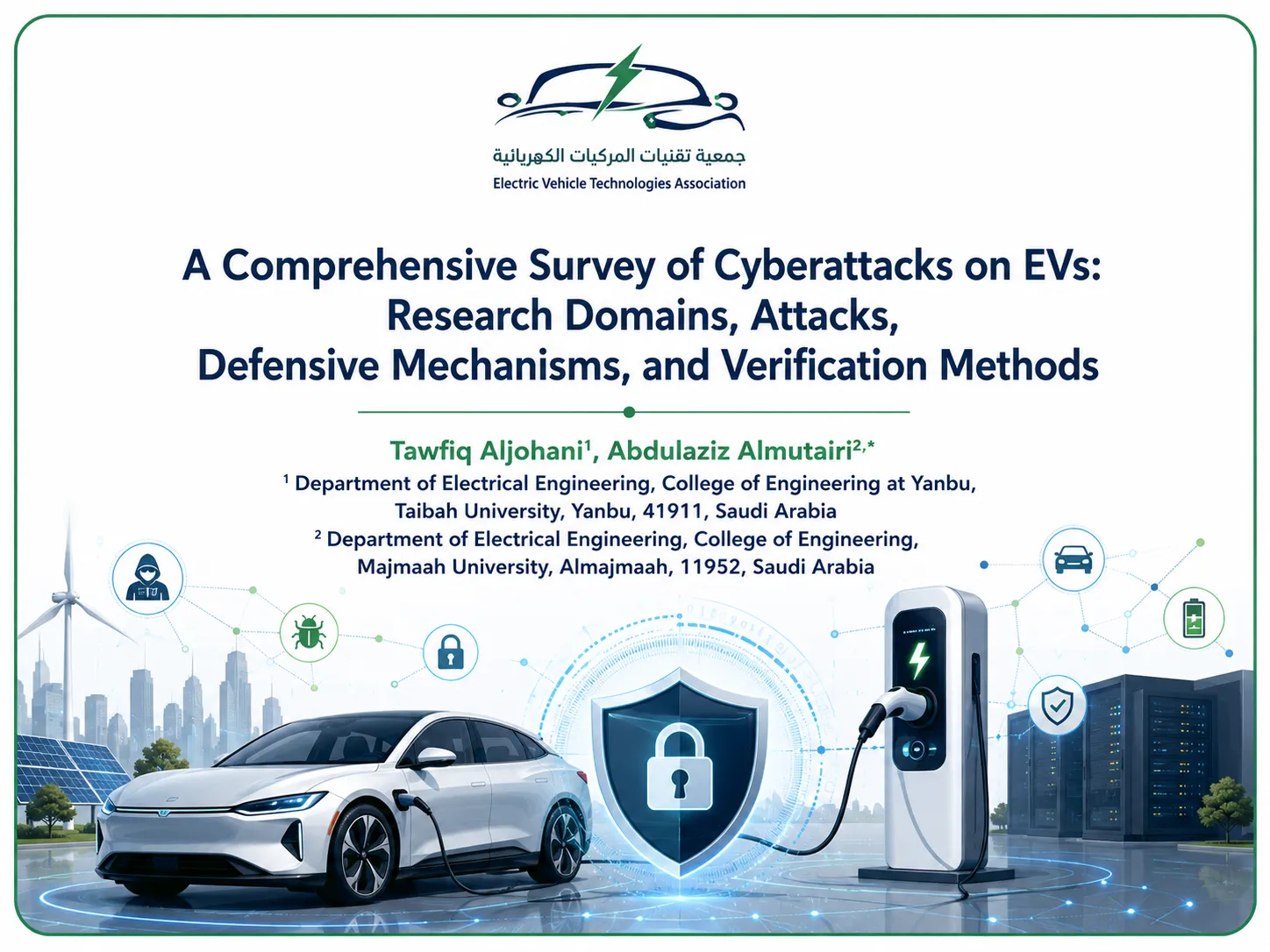
A Comprehensive Survey of Cyberattacks on EVs: Research Domains, Attacks, Defensive Mechanisms, and Verification Methods
Tawfiq Aljohani, Dr. Abdulaziz Almutairi
Taibah University, Majmaah University
This study provides a comprehensive overview of cyberattacks against electric vehicles from four distinct perspectives. It examines EV-related research domains and their susceptibility to cyber threats, CIA-based attacks targeting confidentiality, integrity, and availability, countermeasures and defensive mechanisms including prevention, detection, response, and recovery techniques, and verification and validation methodologies using software tools and hardware testbeds. The study provides an understanding of the current state of cyberattacks against EVs and serves as a valuable resource for researchers and practitioners in cybersecurity and electric mobility.
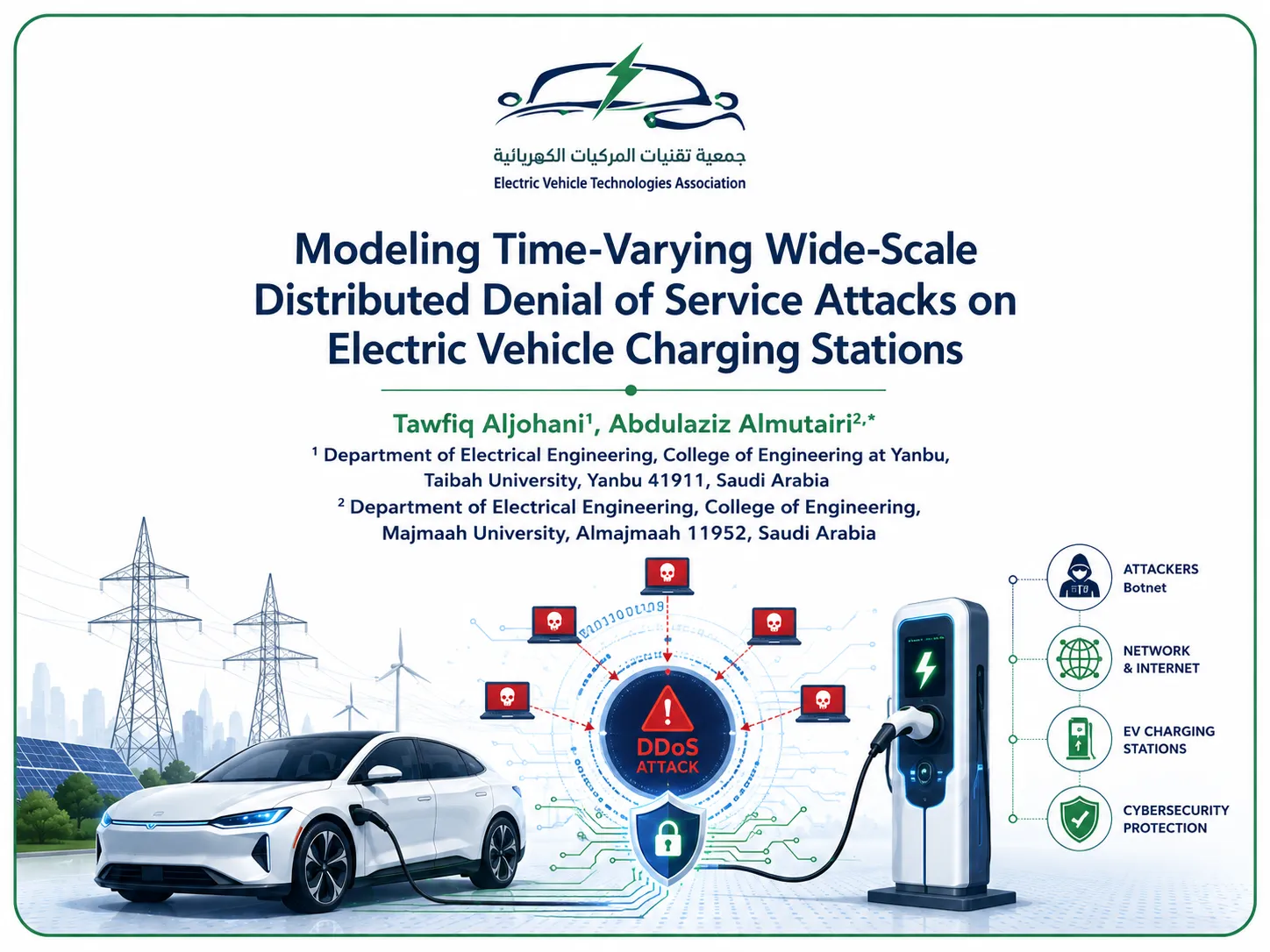
Modeling Time-Varying Wide-Scale Distributed Denial of Service Attacks on Electric Vehicle Charging Stations
Tawfiq Aljohani, Abdulaziz Almutairi
Taibah University, Majmaah University
This study investigates Distributed Denial of Service (DDoS) attacks targeting Electric Vehicle Charging Stations (EVCS) and their potential implications for grid stability. It introduces a mathematical model for wide-scale DDoS attacks using a time-varying Poisson process to represent attack traffic and bot behavior. The model incorporates the Ornstein-Uhlenbeck process to capture variations in attack intensity over time and applies queueing theory to analyze traffic dynamics, delays, and service interruptions. The study also evaluates the effects of DDoS attacks on the dynamic and steady-state operation of the power grid, demonstrating that successful disruptions of EV charging stations can cause significant disturbances and highlighting the need for robust cybersecurity protocols.